
Description
Water is treated by using the combination of the below-mentioned units in hemodialysis:
- Filtration
- Adsorption
- Ion Exchange
- Reverse osmosis (RO)
- Ultraviolet (UV) disinfection
Temperature and pH
The ideal temperature for reverse osmosis membranes is 25 °C. At lower temperatures, the RO membranes produce a lower volume of permeate water. However, at higher temperatures, the membranes could be damaged. The ideal pH for feed water in the hemodialysis water treatment system is 5.0-8.5. If the pH is higher than 8.5, a chemical dosing system may be used to inject a small amount of acid to lower the pH.
1. Sediment filter
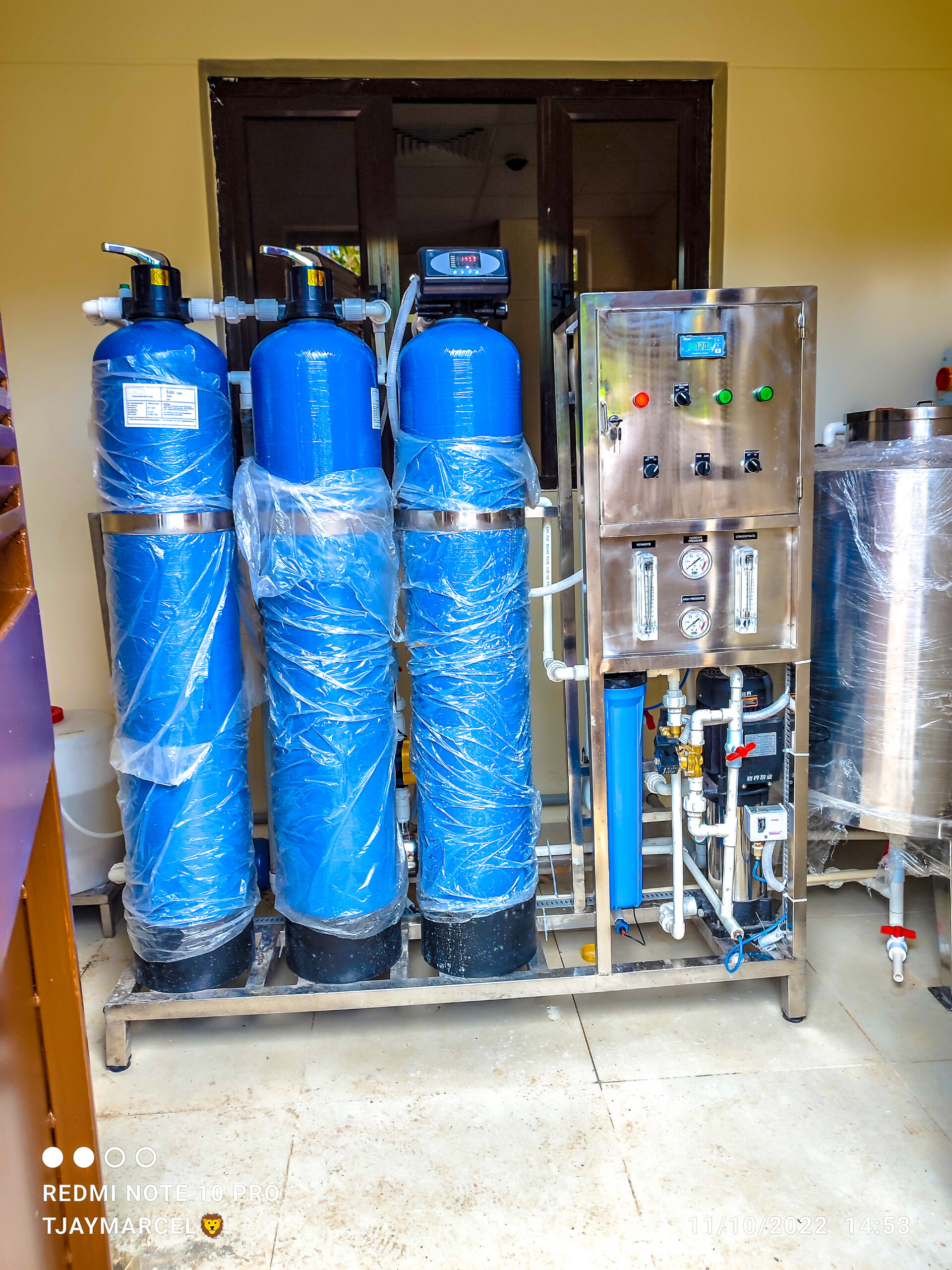
The multimedia filter is the most common sediment filter and has layers of different-sized rocks. Due to these different-sized rocks, the filtration unit is also called a multimedia filter. It can remove particles bigger than 20 microns and sometimes as low as 10 microns. A sediment filter removes the particles in water that cause turbidity. These particles can clog activated carbon media and damage softener resin and RO membranes if not used. Multimedia filters are composed of multiple layers of media, typically coal (anthracite), sand (quartz), and garnet, which are of different sizes.
2. Carbon Filter
Activated carbon (GAC) is used in water treatment systems to remove chlorine and chloramine from water. These agents are commonly added to tap water in small quantities to prevent microbiological growth. However, if we fail to remove chlorine and chloramines from treated water, it can lead to severe hemolytic anemia in patients on dialysis. Also, free chlorine has been known to degrade certain reverse osmosis membranes, leading to holes in the membranes that causes failure of appropriate filtration.
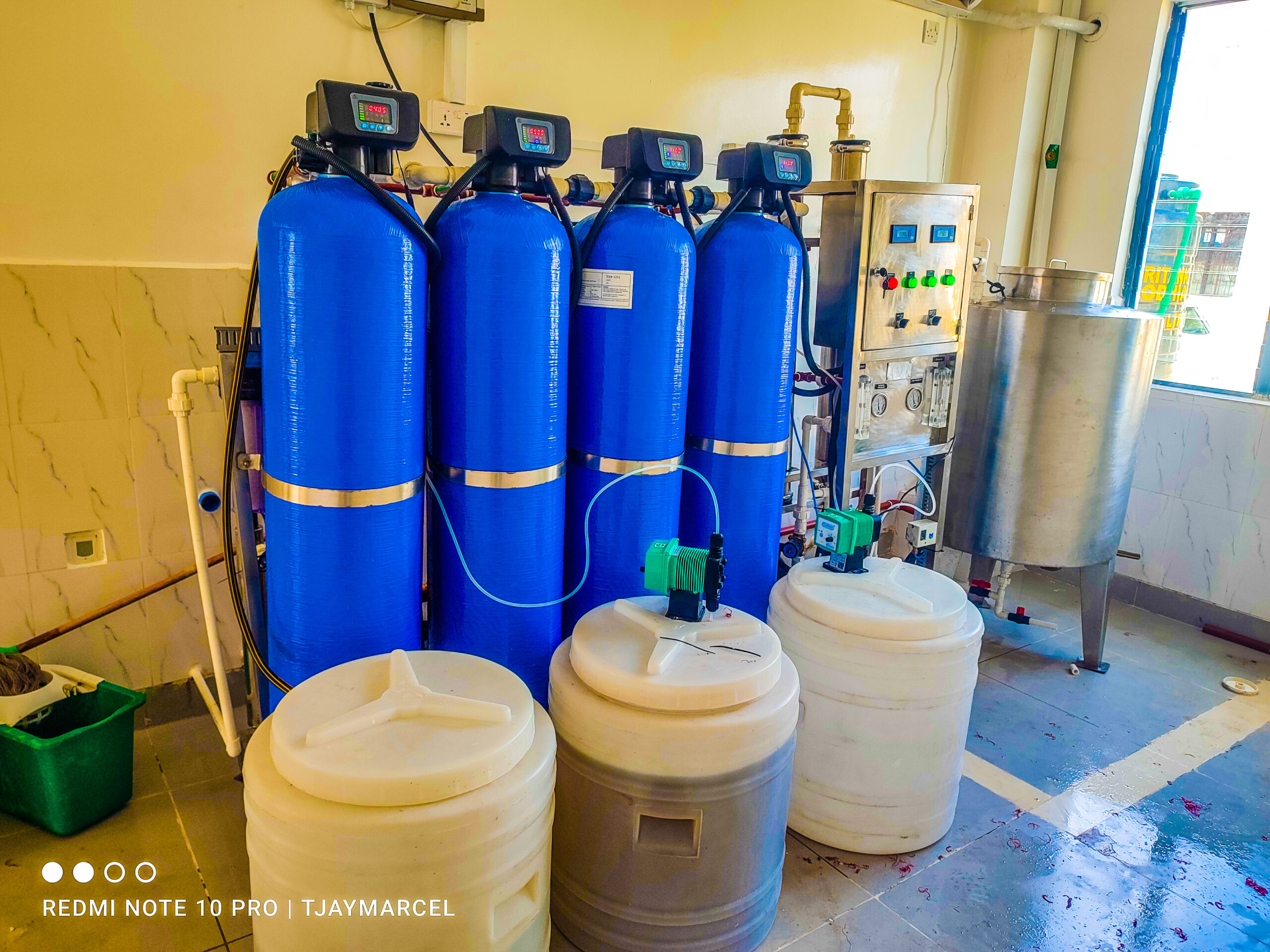
Carbon filters also remove organic matter, odor-producing materials, pesticides, and industrial solvents by adsorption. Adsorption is the process in which liquids, gases, or suspended materials cling to a surface. Depending on the inlet water quality, one or two carbon tanks could be in the system. In case two tanks are installed in series, the first tank is named worker and the second as the polisher or backup. Using two tanks in series results in very effective removal of chlorine in the feed water and guarantees the treatment for failure cases in one of the carbon tanks.
Empty Bed Contact Time (EBCT)
EBCT is the time it takes for water to flow through the carbon tanks. According to AAMI, an EBCT of 10 minutes is effective in activated carbon tanks.
3. Water softener
A water softener is used to remove the hardness of the water. The hardness of water is due to the presence of calcium (Ca2+) and magnesium (Mg2+). These elements cause hardness in water in their carbonate, sulfate, or phosphate forms. Hard water syndrome is a dialysis-induced illness caused by using hard water to prepare dialysate that could result in nausea and vomiting during dialysis, extreme weakness, and unexpected changes in blood pressure.
A water softener removes hardness from water by a mechanism named ion exchange. The resin used inside the softener tanks can exchange the ions until the saturation point at which it becomes unable to exchange ions any further. At this point, regeneration with salt (brine), mainly sodium chloride (NaCl), is required to free the surface of the resin, activate it again, and prepare for hardness removal.
4. Microfiltration
Microfiltration is used to retain any particulates or media from the pre-treatment tanks to avoid mixing with other media and damaging electronic valves and other units. Different micron sensitivity, such as 20, 5, and 1 micron, are used between the pre-treatment units.
5. Reverse osmosis (RO)
It is the purification system itself that removes the organic and inorganic materials, minerals, bacteria, and endotoxins from water. In reverse osmosis, the molecules move from a concentrated solution to a less concentrated solution, pure water. For this process to occur, a pressure higher than osmotic pressure and a semipermeable membrane limiting the passage of dissolved ionic substances are needed. Pure water can be obtained thanks to the appropriate pressure and membrane. Reverse osmosis technology is the most sensitive membrane filtration technology known where up to 99.5% stable and 99.3% minimum salt removal occurs.
Purveyor RO systems are generally able to treat up to 2000 ppm total dissolved solids (TDS) in water to pure water. However, when well water is used for dialysis, and if the water quality is not good enough that a standard system could treat it efficiently, then a second RO system is installed in a series called double-pass reverse osmosis or twin-pass reverse osmosis. Ultrapure water can be achieved using a double-pass RO system, and quality water can be provided for dialysis.
6. Deionization (DI)
DI units are resin media where the ions remaining after RO are adsorbed to provide 0 µS/cm conductivity. These units are generally used as backup and only used when the RO is not functioning properly or needs extra purification.
7. Distribution Loop and Submicron Filtration
The distribution loop is the pipes and fittings that distribute the pure water to the dialysis machines and return.
Submicron filters used in hemodialysis water treatment systems loop is 0.22 mm pore diameter. They can be used for extra safety in the loop. When an ultraviolet disinfection unit is added after RO in the system, using an endotoxin filter, a submicron filter, is also a must to retain the endotoxin released from bacteria cell death.

Reviews
There are no reviews yet.